Top Phenolic Plywood Manufacturers for Global Buyers

Time:2026-09-16 Author:Sienna
0%

Choosing among the top Phenolic Plywood manufacturers requires more than comparing prices and glossy catalogs. Global buyers must examine panel performance, production consistency, documentation, and after-sales support. A well-made 18mm panel should show a stable core, clean edges, even film coverage, and reliable bonding under moisture and heat. Small details matter. They affect construction speed.

Dr. Mark Knaebe, a wood adhesive specialist at the USDA Forest Products Laboratory, has noted, “Phenolic resins are used where durability and moisture resistance are important.” That principle remains practical for demanding applications, including concrete formwork, transport floors, and exterior structures. However, resin quality alone does not guarantee dependable Phenolic Plywood. Veneer grading, pressing conditions, overlay weight, sanding accuracy, and factory quality control also deserve close inspection.

This guide introduces leading manufacturers for international buyers and explains how to compare them more carefully. It considers relevant standards, test reports, packaging methods, production capacity, and export experience. Buyers should verify claims independently. A certificate may describe one product, not every batch. A low quotation may hide weaker cores or limited technical support. No supplier is perfect. Even experienced purchasers can overlook moisture exposure, container loading conditions, or regional compliance requirements. The strongest buying decision combines factory evidence, sample testing, clear specifications, and realistic communication. That process takes longer, but it reduces costly surprises after shipment.
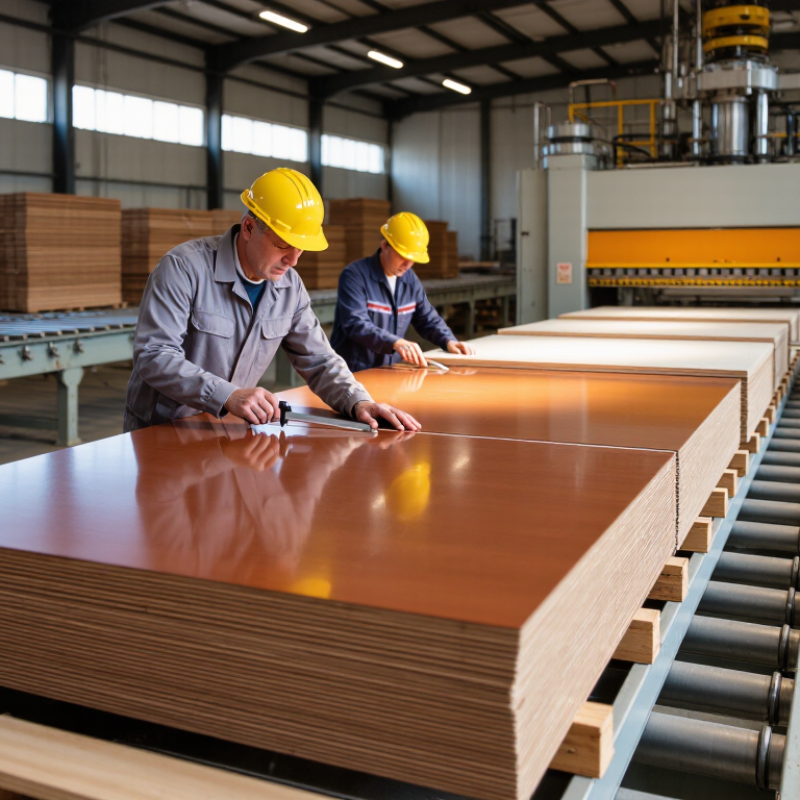
Top Phenolic Plywood Manufacturers for Global Buyers

Phenolic Plywood: Definition, Composition, and Key Properties

Phenolic plywood is an engineered panel made from thin wood veneers bonded with phenolic resin. The veneers are cross-laid, creating strength in several directions. Many panels also receive a resin-impregnated paper film on one or both faces. This dark, smooth surface is often mistaken for solid resin. It is not. The film protects the panel and improves release performance.

Its composition explains its practical behavior. Phenolic resin forms a strong bond after hot pressing, while the timber core provides stiffness and workable weight. High-quality panels usually have consistent veneer thickness, tight joints, and carefully sealed edges. These details support dimensional stability in changing humidity. The coated face resists abrasion, water contact, and concrete adhesion better than ordinary plywood. It can support repeated formwork cycles when handled correctly.

It is moisture resistant, not permanently waterproof. Cutting, drilling, or damaged edges can expose the wood core. Water may then enter, especially during careless storage. From a buyer’s inspection experience, flatness, edge sealing, surface bubbles, and delamination deserve close attention. Thickness tolerance also affects panel performance. Specifications can look impressive, yet manufacturing quality varies between suppliers. That is worth questioning. Proper storage keeps sheets raised from the ground, covered, and ventilated. Harsh cleaning, excessive impact, and unsupported spans can shorten service life. Phenolic plywood therefore suits demanding construction, transport, and industrial applications, but its performance depends on resin quality, veneer selection, pressing control, and daily handling.

How to Evaluate Phenolic Plywood Manufacturers Worldwide

Top Phenolic Plywood Manufacturers for Global Buyers
How to Evaluate Phenolic Plywood Manufacturers Worldwide

Evaluating phenolic plywood manufacturers requires more than comparing prices. Check the factory’s production experience, core materials, and quality-control procedures. Ask how many pressing cycles each panel receives and how workers control temperature and pressure. A reliable manufacturer should provide batch records, product specifications, and recent laboratory reports.

Inspect the plywood closely. The surface should feel smooth, without bubbling, open edges, or uneven film coverage. Cut a sample and examine the core layers for gaps and loose veneers. Test thickness, bonding strength, water resistance, and formaldehyde emissions through independent laboratories when possible. Standards such as EN or ASTM can help, but only when the test conditions match your intended use.

Request samples from different production batches.
Consistency matters more than one perfect panel.

Also review packaging, moisture protection, loading methods, and delivery records. Clear labeling should show thickness, grade, batch number, and production date. A factory visit can reveal useful details, such as clean storage areas and calibrated testing equipment. Still, a polished showroom can mislead. Some buyers focus too heavily on certificates and overlook weak after-sales communication. That is a mistake worth considering. The strongest supplier usually answers technical questions directly, admits material limitations, and offers a practical replacement process for verified defects.

Leading Production Regions and Manufacturer Capabilities

Top Phenolic Plywood Manufacturers for Global Buyers

Leading Production Regions and Manufacturer Capabilities

Production strength differs across major plywood regions. China offers broad capacity, automated pressing lines, and flexible custom sizing. Malaysia and Indonesia are known for hardwood-based panels and export-oriented production. Turkey and Poland serve buyers seeking European logistics and consistent industrial processing. However, regional reputation cannot replace factory-level verification.

Experienced buyers inspect veneer quality, core gaps, panel thickness, and phenolic film coverage. Reliable manufacturers provide technical data, batch records, and independent test reports. Important tests include bond strength, water resistance, formaldehyde emissions, and surface wear. Some factories also offer CNC cutting, edge sealing, grooving, and custom packaging. These services can reduce jobsite waste, especially for concrete formwork and transport flooring. Yet supplier claims may not match field performance. A small trial order remains sensible.

Tips: Request samples from different production batches. Check panel weight and thickness with your own tools. Ask how veneer moisture is controlled before pressing. Confirm whether test results match your required standard and application. Inspect packaging carefully; damaged corners often reveal weak export handling. A factory visit helps, but it is not perfect evidence. Pair visual checks with laboratory testing and written quality agreements.

Quality Standards, Certifications, and Product Specifications

Top Phenolic Plywood Manufacturers for Global Buyers

Reliable phenolic plywood begins with controlled raw materials and repeatable production. Buyers should examine veneer species, core construction, thickness tolerance, and surface film weight. Common specifications include 9, 12, 15, 18, and 21 millimetres. A dense, void-free core usually improves screw holding and panel stability. Yet, attractive faces can hide weak inner layers.

Quality documents should match the actual product, not a general factory promise. Look for EN 314 bonding performance, EN 636 moisture resistance, and low-emission results such as E1 classification. ISO 9001 supports process control, while FSC or PEFC certification can verify responsible wood sourcing. Request recent test reports, batch numbers, and inspection records. A certificate alone is not proof. Its scope and expiry date matter. Some suppliers provide impressive paperwork but unclear product details. That deserves careful review.

Tips: Compare samples under wet and dry conditions. Measure thickness at several points. Check film adhesion after cutting and drilling. Ask for loading photographs and moisture readings before shipment. Confirm edge sealing requirements for your climate. A small sample may perform perfectly, but production batches can vary. Independent inspection is often worthwhile, especially for large orders. Specification sheets should state tolerances, density, formaldehyde level, bonding class, and intended application.

Top Phenolic Plywood Manufacturers for Global Buyers - Quality Standards, Certifications, and Product Specifications

Evaluation Dimension Product or Compliance Requirement Typical Specification or Acceptance Level Relevant Standard or Certification Global Buyer Verification Points
Panel Construction Multi-layer hardwood or softwood plywood with waterproof phenolic resin bonding Cross-laminated veneer structure; balanced lay-up; core gaps and overlaps controlled during production EN 636EN 314-2 Request the technical data sheet, veneer construction details, and production inspection records.
Common Thickness Range Construction, transportation, concrete-formwork, and industrial applications Typical commercial range: 6–30 mm; common formwork thicknesses include 12, 15, 18, 21, and 24 mm EN 315EN 12872 Confirm actual thickness tolerance, calibration method, and whether the quoted size is nominal or finished.
Standard Panel Sizes Export-oriented sheet dimensions Common formats include 2440 × 1220 mm, 2500 × 1250 mm, and 3050 × 1525 mm; custom sizes may be available EN 326-1 Check cutting tolerance, squareness, edge straightness, pallet dimensions, and container loading plan.
Bonding Performance Exterior-grade or heavy-duty waterproof bonding Bond line should resist moisture, repeated wetting and drying, and the intended service environment without delamination EN 314-2 Class 3EN 636-3 Ask for bond-quality test results and confirm whether the product is suitable for permanent exterior exposure.
Surface Film Phenolic film overlay for wear resistance and reduced moisture absorption Typical film weights range from approximately 120–240 g/m² per face; heavier films generally provide improved wear resistance EN 438-2EN 14323 Verify film weight, surface color, gloss level, texture, edge sealing, and resistance to concrete release chemicals.
Surface Options Smooth, wire-mesh, or anti-slip embossed phenolic surface Smooth panels are common for concrete formwork; embossed panels are used for flooring, platforms, and vehicle bodies EN 12872EN 13823 Confirm pattern depth, slip-performance test method, cleanability, and suitability for the final application.
Thickness Tolerance Consistency across the full panel and between production batches Typical tolerance depends on nominal thickness and applicable standard; calibrated panels generally provide tighter control than non-calibrated panels EN 315EN 324-1 Specify the permitted tolerance in the purchase contract rather than relying only on nominal thickness.
Mechanical Strength Bending strength, modulus of elasticity, and screw-holding performance Values vary significantly by wood species, veneer direction, thickness, and construction; project calculations should use tested values EN 310EN 789ASTM D1037 Request test values in both principal directions and confirm the declared design values for structural use.
Moisture Content Moisture level at the time of shipment Common target range is approximately 8–14%, depending on wood species, climate, and applicable product standard EN 322ISO 16979 Measure representative samples on arrival and allow panels to acclimatize before installation.
Formwork Reuse Potential Durability during repeated concrete casting cycles Reuse count is application-dependent and may range from several cycles to several dozen cycles when panels are properly handled and maintained EN 13353EN 12872 Do not accept a fixed reuse claim without information on concrete mix, panel thickness, release agent, cleaning, and edge protection.
Formaldehyde Emissions Low-emission plywood for indoor or regulated markets Typical classifications include E1 under European requirements and CARB Phase 2 or TSCA Title VI for the United States EN 717-1CARB Phase 2EPA TSCA Title VI Verify certificates, test reports, production-site scope, and whether the certificate covers the exact panel construction.
Reaction to Fire Fire classification for building and interior applications Classification depends on wood species, thickness, density, surface treatment, and end-use assembly; it is not automatically assigned to all plywood EN 13501-1EN 13986 Request a fire classification report for the exact product and installed configuration.
Sustainable Forestry Traceable timber sourced from responsibly managed forests Chain-of-custody documentation may be available for certified material; claims must match the legal entity and product scope FSC Chain of CustodyPEFC Chain of Custody Check certificate validity, certificate scope, claim type, invoice wording, and chain-of-custody continuity.
Product Quality Management Controlled manufacturing, inspection, corrective action, and traceability systems A documented quality management system should control raw materials, pressing parameters, sanding, finishing, testing, and batch release ISO 9001 Review the certificate scope and request batch identification, inspection plans, and non-conformance procedures.
Dimensional Stability Resistance to swelling, shrinkage, and warping during service Performance is influenced by veneer moisture, lay-up balance, pressing, storage, and exposure conditions EN 317EN 12872 Request thickness-swelling data, flatness limits, storage instructions, and packaging protection for ocean shipment.
Edge Treatment Sealed or painted edges to reduce moisture ingress Factory edge sealing is commonly specified for formwork and exterior-use panels; coating must remain continuous after cutting EN 636EN 12872 Confirm coating type, number of coats, color, drying condition, and whether field-cut edges require resealing.
Quality Inspection Pre-shipment inspection and batch consistency Inspection should cover appearance, dimensions, moisture content, bonding, surface defects, packaging, and labeling EN 326-1ISO 2859-1 Define sampling level, acceptable quality limit, inspection party, and corrective-action process before production.
Packaging and Export Readiness Protection against impact, moisture, and deformation during international transport Typical export packaging includes wrapped pallets, corner protection, steel or plastic strapping, moisture barriers, and clear markings ISPM 15Incoterms 2020 Confirm fumigated wood packaging, gross weight, pallet dimensions, container loading, and shipping marks.
Documentation Package Technical and commercial documents supporting import, construction, or project approval Recommended documents include commercial invoice, packing list, bill of lading, certificate of origin, test report, SDS where applicable, and certificate copies ISO/IEC 17025EN 13986 Ensure test reports are issued by competent laboratories and correspond to the product specification and manufacturing site.
Note: Actual performance depends on veneer species, panel construction, resin system, production controls, storage, installation, and service conditions. Buyers should approve a representative sample and require product-specific test documentation before placing a large order.

Global Sourcing, Pricing, Logistics, and Buyer Considerations

Top Phenolic Plywood Manufacturers for Global Buyers

Global Sourcing, Pricing, Logistics, and Buyer Considerations

Global buyers should evaluate phenolic plywood beyond the factory quotation. FAO’s Global Forest Products Facts and Figures 2023 reports roughly 400 million cubic metres of wood-based panels produced worldwide in 2022. This scale creates choice, but also uneven quality. Request test reports for thickness tolerance, bonding strength, formaldehyde emissions, surface wear, and moisture resistance. A sample should be tested after soaking, pressing, and edge exposure. Small defects often become expensive on site.

Pricing depends on veneer grade, phenolic resin content, film weight, dimensions, and order volume. Compare landed cost, not only the mill price. Include inspection, export packing, insurance, duties, inland delivery, and possible port storage. A low quote can still be wrong. I would question unusually cheap offers, especially when the supplier avoids clear tolerances or resin specifications. Independent pre-shipment inspection is sensible, though it cannot replace laboratory testing.

Logistics planning needs equal attention. UNCTAD’s Review of Maritime Transport 2023 states that shipping carries over 80% of global merchandise trade by volume. Container availability, seasonal congestion, and route changes can therefore affect project schedules. Use waterproof wrapping, reinforced pallets, corner protection, and visible lot numbers. Ask for moisture readings before loading. Keep chain-of-custody records and regulatory documentation where required. Some purchasing plans still ignore replacement panels and damaged-cargo allowances. That omission deserves reconsideration.

FAQS

What should buyers check before choosing a phenolic plywood manufacturer?

Review production experience, core materials, pressing methods, and quality-control records. Ask for specifications, batch records, and recent laboratory reports.

How can buyers inspect panel quality?

Feel the surface for bubbles, open edges, and uneven film coverage. Cut a sample and inspect the core for gaps or loose veneers.

Which tests are important for phenolic plywood?

Test thickness, bonding strength, water resistance, surface wear, and formaldehyde emissions. Use an independent laboratory when possible.

Why should buyers request samples from several batches?

One excellent panel proves little. Samples from different batches reveal production consistency, thickness variation, and changing surface quality.

How can buyers verify technical claims?

Compare test conditions with the intended application and required standard. Ask whether results represent the same thickness and production process.

What details should buyers inspect during a factory visit?

Check clean storage areas, moisture-control procedures, pressing equipment, and calibrated testing tools. A polished showroom can still mislead.

What packaging details matter during international delivery?

Confirm moisture protection, corner protection, clear labels, and secure loading. Labels should show thickness, grade, batch number, and production date.

Which production regions may offer useful capabilities?

Different regions provide different strengths, including flexible sizing, hardwood-based panels, export logistics, and industrial processing. Regional reputation is not enough.

Can custom processing reduce project waste?

CNC cutting, edge sealing, grooving, and custom packaging may reduce jobsite waste. Confirm measurements carefully before ordering.

What should buyers expect from after-sales support?

A dependable supplier answers technical questions directly and admits material limitations. Written replacement procedures matter when defects are verified. That judgment is imperfect.

Conclusion

Phenolic Plywood is an engineered wood panel made from layered veneers bonded with phenolic resin, creating a dense, durable, and moisture-resistant material. Its smooth or textured film surface, high load-bearing capacity, dimensional stability, and resistance to abrasion make it suitable for construction, transportation, industrial flooring, concrete formwork, and other demanding applications. This overview explains how global buyers can evaluate manufacturers by reviewing production technology, veneer quality, resin performance, factory capacity, quality-control procedures, and experience with international orders.

It also examines major production regions and the capabilities buyers may expect from different suppliers, including custom dimensions, surface treatments, core options, and packaging solutions. Key quality standards, certifications, testing methods, and product specifications are discussed to support reliable comparisons. Finally, the guide highlights practical sourcing considerations such as pricing structures, minimum order quantities, payment terms, shipping methods, lead times, documentation, and import requirements, helping buyers select suitable Phenolic Plywood products while balancing performance, cost, and supply-chain reliability.


Sienna

Sienna

Sienna is a skilled marketing professional with a deep expertise in our company’s core products and services. With a passion for innovation and detail, she plays a pivotal role in crafting insightful blog posts that not only highlight the unique features of our offerings but also provide valuable......