Top China Film Faced Plywood Suppliers for Global Buyers

Time:2026-10-21 Author:Madeline
0%

Global buyers need more than a supplier list when sourcing China Film Faced Plywood. They need evidence, consistency, and practical construction performance. A glossy panel may look impressive under warehouse lights. Its real value appears later, beside concrete forms, repeated lifting, moisture, and rough handling.

Dr. Zhiyong Cai, a wood-composites researcher at the USDA Forest Products Laboratory, has emphasized, “Wood products perform best when material selection matches the application.” This principle matters when comparing Chinese manufacturers. Buyers should examine veneer species, core structure, phenolic film weight, bonding quality, panel thickness, and edge sealing. Supplier experience also deserves attention. Factory audits, production photographs, test reports, and independent inspections can reveal more than polished brochures.

Details often decide the result.

This guide introduces leading China Film Faced Plywood suppliers for international buyers. It considers manufacturing capability, product range, export experience, quality controls, packaging, and communication. The strongest supplier is not always the largest factory. A smaller producer may offer careful customization, while a large mill may provide stronger capacity and steadier stock.

Still, no supplier profile tells the whole story. Product claims can change between batches. Test data may not reflect every jobsite condition. Buyers should request recent samples and compare them under realistic use. They should also confirm formaldehyde data, moisture resistance, dimensional tolerance, and replacement procedures before ordering.

That caution is intentional. Plywood selection is partly technical and partly practical judgment. A reliable partnership grows through transparent questions, documented specifications, and honest responses when something goes wrong.
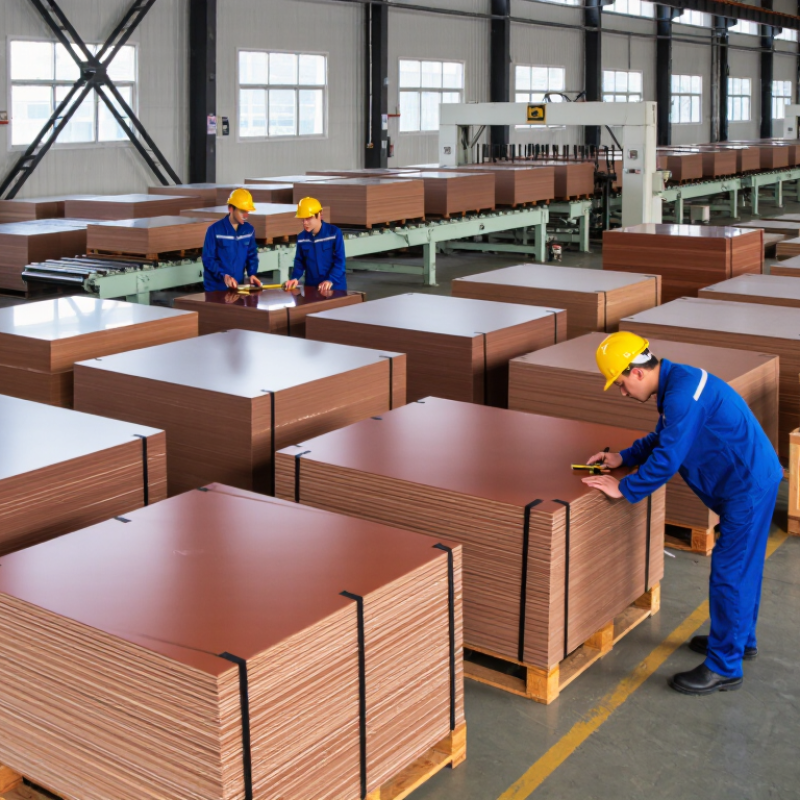
Top China Film Faced Plywood Suppliers for Global Buyers

What Is China Film Faced Plywood?

Film faced plywood is an engineered panel designed for concrete formwork and demanding construction work. It usually contains layered wood veneers bonded under pressure. A dark or brown phenolic film covers both faces, creating a smoother, more moisture-resistant surface. This coating helps concrete release cleanly and can reduce surface marks.

The panel is not completely waterproof. Prolonged soaking, poor edge sealing, or rough handling can damage the core. Experienced buyers check veneer gaps, panel thickness, film weight, and bonding quality before placing large orders. A reliable China supplier should provide technical data, production photos, sample panels, and clear inspection records. These details show more than a polished sales page. Still, documents can miss practical weaknesses. A small trial order is often wiser.

Tips: Ask how many reuses the panel can support under your working conditions. Store sheets flat and keep them away from standing water. Seal cut edges before use. Compare samples after curing, not only when they look new. Some buyers focus on price and regret it later. That mistake is understandable, but avoidable. Different projects need different core grades, film thicknesses, and panel dimensions. A supplier with construction experience can help match the plywood to local climate, formwork pressure, and expected reuse cycles.

Key Quality Standards for Film Faced Plywood

Top China Film Faced Plywood Suppliers for Global Buyers

Film faced plywood quality begins with measurable standards, not glossy surfaces. The FAO Yearbook of Forest Products 2022 places global plywood production at roughly 170 million cubic metres. That scale makes consistent grading essential for international buyers. Check veneer species, core gaps, panel thickness, and moisture content before ordering. A dark film can hide weak repairs.

EN 314-2 Class 3 is a useful reference for exterior bonding performance. It evaluates resistance after severe moisture exposure. EN 310 measures bending strength and stiffness. These results matter when panels support wet concrete or repeated construction cycles. Ask for batch-specific test reports, not general certificates. Small details matter.

EN 717-1 sets the E1 formaldehyde emission limit at 0.124 mg/m³ of air. Confirm the test method and laboratory date. The film should resist abrasion, water, and alkaline concrete contact. Surface wear testing can expose poor resin coverage after only a few uses. I have found that edge sealing is often overlooked, although exposed edges absorb water quickly. That weakness may appear after delivery, not during factory inspection. FAO and UNECE market reviews also stress traceable forest-product trade, so suppliers should document wood origin and production batches. Paperwork alone is not proof. Physical inspection still matters.

How to Evaluate Chinese Plywood Suppliers

For global buyers, evaluating Chinese film faced plywood suppliers requires more than comparing prices. Start with factory evidence: production capacity, veneer sources, drying controls, and batch traceability. Ask for recent test reports, not recycled certificates. EN 314-2 verifies bonding quality, while EN 13986 supports construction-use assessment. An ISO/IEC 17025-accredited laboratory should issue performance results. Check panel thickness with a digital caliper. Inspect edges for core gaps, overlaps, and uneven sanding. Small defects often become visible after repeated concrete pours.

Material origin also matters. FAO’s Global Forest Resources Assessment 2020 recorded about 4.06 billion hectares of global forest area. Responsible suppliers should identify wood species and provide credible chain-of-custody records. Do not accept vague claims about “green timber.” Request invoice trails, harvesting documents, and species information. Formaldehyde testing should match the destination market, such as EN 717-1 or applicable local rules. Safety claims need evidence.

Delivery capability deserves equal attention. The World Bank’s Logistics Performance Index 2023 ranked China 19th globally, with a score of 3.7. Strong infrastructure helps, but it cannot replace shipment controls. Confirm moisture protection, pallet strength, container loading photos, and seal numbers. A pilot order is wiser than a large first shipment. Test the panels on your own formwork cycle. A supplier may pass laboratory testing yet fail under site pressure. That uncomfortable gap deserves honest review.

Leading China Film Faced Plywood Supplier Categories

China’s film faced plywood suppliers usually serve several practical categories. Standard phenolic-film panels fit concrete walls, columns, and slabs. Their smooth brown or black surfaces can support repeated formwork use. Performance depends on the core, adhesive, film weight, and edge sealing.

Anti-slip film faced plywood suits platforms, vehicle floors, and temporary walkways. Its embossed surface improves grip when conditions become wet. High-strength structural panels use denser veneers and tighter core construction. These panels are useful where heavy loads and frequent handling are expected. Custom-cut plywood can match regional formwork systems and reduce site trimming.

Experienced buyers should compare more than quoted prices. Ask for veneer thickness, moisture content, panel tolerance, film weight, and bonding test results. A reliable supplier should provide production samples and clear inspection records. Check whether edges are sealed evenly, without open gaps or rough patches. Container loading also matters; poor stacking can damage corners before arrival.

No category performs perfectly in every climate. Even well-made panels may warp after careless storage or long exposure to rain. That limitation is easy to overlook. Trial orders can reveal core gaps, surface scratches, and actual reuse potential. A careful sourcing process links each plywood category to the project’s load, weather, handling method, and expected service life.

Top China Film Faced Plywood Suppliers for Global Buyers - Leading China Film Faced Plywood Supplier Categories

Supplier Category Common Face Film Typical Thickness Common Panel Sizes Core Options Adhesive Options Typical Applications Key Buying Considerations
General construction film faced plywood Phenolic resin-coated paper film 12–21 mm 1220 × 2440 mm; 1250 × 2500 mm Poplar, hardwood, eucalyptus, mixed hardwood Melamine-urea-formaldehyde or phenolic resin Concrete walls, slabs, columns and foundations Check panel flatness, edge sealing, film weight and bonding quality.
High-reuse formwork plywood Heavy-duty phenolic film, commonly 220–240 g/m² 15–21 mm 1220 × 2440 mm; 1500 × 3000 mm Multi-layer hardwood or eucalyptus veneer Weather-resistant phenolic adhesive Repeated concrete formwork and large construction projects Request verified reuse-cycle results; performance depends on handling and release-agent use.
Lightweight poplar-core plywood Dark or brown phenolic film 12–18 mm 1220 × 2440 mm; 1250 × 2500 mm Poplar veneer MR or melamine-urea-formaldehyde; upgraded grades may use phenolic resin Low-load formwork, interior construction and temporary structures Lower weight improves handling, but load capacity and moisture resistance must be verified.
High-strength hardwood-core plywood High-density phenolic film 15–25 mm 1220 × 2440 mm; 1500 × 3000 mm Birch-type, eucalyptus or other hardwood veneer Phenolic resin adhesive High-load slabs, bridge work, beams and heavy-duty formwork Review modulus of elasticity, bending strength, screw-holding and thickness tolerance.
Anti-slip film faced plywood Embossed phenolic film with mesh or hexagonal texture 12–30 mm 1220 × 2440 mm; 1250 × 2500 mm Hardwood, eucalyptus or mixed hardwood Exterior-grade phenolic adhesive Truck floors, warehouse platforms, walkways and industrial flooring Specify surface pattern, slip performance, abrasion resistance and edge protection.
Wire-mesh film faced plywood Phenolic film with wire-mesh embossing 15–30 mm 1220 × 2440 mm; 1500 × 3000 mm Hardwood or eucalyptus veneer Exterior-grade phenolic resin Vehicle decks, loading areas, stairs and service platforms Confirm mesh orientation, wear layer, moisture resistance and permissible surface defects.
Cut-to-size and CNC-ready panels Smooth phenolic film or custom surface film 12–25 mm Custom dimensions based on cutting plans Poplar, eucalyptus, hardwood or composite cores Specified according to end use and exposure conditions Prefabricated formwork, modular construction and industrial components Provide CAD files, tolerances, drilling details, edge treatment and packaging requirements.
Certified export-grade plywood Phenolic film selected for moisture-resistant applications 12–25 mm 1220 × 2440 mm; 1250 × 2500 mm; custom sizes Poplar, eucalyptus, hardwood or mixed veneer Moisture-resistant or exterior-grade resin systems International construction, infrastructure and distribution projects Confirm applicable documentation, emission class, inspection method, palletization and shipping terms.
Buyer checklist: Confirm thickness tolerance, veneer grade, bonding quality, film grammage, water-boil or delamination performance, formaldehyde-emission requirements, edge sealing, inspection standards and export packaging before placing an order.

Global Buying, Inspection, and Shipping Considerations

For global buyers, selecting top China film faced plywood suppliers requires more than comparing prices. Supplier audits should examine veneer species, core construction, adhesive type, panel thickness, and production traceability. The FAO Forestry Production and Trade database shows plywood remains a major traded wood product, but reported volumes vary across countries and customs systems. That makes independent verification valuable.

Request recent laboratory reports for formaldehyde emissions, bonding strength, moisture content, and thickness tolerance. Check samples from different production batches, not only showroom panels. A practical inspection can include caliper measurements, edge sealing checks, surface-impact tests, and random carton counts. Film weight also matters. Thin film may look acceptable but fail quickly on concrete contact. I have seen buyers focus on appearance and overlook core gaps. That mistake becomes expensive.

Shipping needs equal attention. UNCTAD’s Review of Maritime Transport states that more than 80% of global merchandise trade moves by sea. Confirm container loading plans, pallet dimensions, moisture protection, and cargo insurance before booking. The World Bank’s 2023 Logistics Performance Index evaluates customs, infrastructure, and shipment reliability across 139 economies, showing why destination-country delays must be planned. Verify packaging marks and applicable timber-treatment requirements. ISPM 15 may apply to solid-wood pallets and crates, depending on the packaging design. Delivery forecasts are never perfect. Allow buffer time. Container shortages, port congestion, and document corrections can still disrupt an otherwise well-managed order.

Top China Film Faced Plywood Suppliers for Global Buyers - Global Buying, Inspection, and Shipping Considerations

This chart compares common export panel formats by sheet area. Actual availability, thickness, film weight, core composition, packaging, and container loading should be confirmed with the supplier before purchase.

Buying and inspection checklist: verify panel dimensions and thickness tolerance, film coverage and film weight, core quality, edge sealing, bonding performance, formaldehyde requirements, packaging strength, and pre-shipment inspection records. For shipping, confirm the selected panel format, total quantity, packing method, container payload limits, port charges, Incoterms, and destination-country import requirements. Sheet areas are calculated from the stated nominal dimensions.

FAQS

What is film faced plywood used for?

It is mainly used for concrete formwork and demanding construction work. Layered wood veneers form the core. A dark phenolic film covers both faces. The smooth surface helps concrete release cleanly.

Is film faced plywood completely waterproof?

No, it is not completely waterproof. Long soaking can damage the wooden core. Open edges absorb water quickly. Seal every cut edge before use.

How can buyers check plywood quality?

Inspect veneer gaps, panel thickness, moisture content, film weight, and bonding quality. Ask for batch-specific test reports. Check samples after concrete curing, not only when new. Paperwork helps, but it can miss practical weaknesses.

What standards are useful for evaluating this plywood?

Exterior bonding standards can show moisture resistance. Bending and stiffness tests reveal structural performance. Emission testing checks indoor air safety. Confirm test methods, laboratory dates, and matching production batches.

How many times can one panel be reused?

Reuse depends on the core, film thickness, handling, and storage. Concrete pressure also matters. A panel may look fine but perform poorly later. Test a small order under real site conditions.

Which plywood type suits heavy construction work?

High-strength panels use denser veneers and tighter cores. They suit heavy loads and frequent handling. Standard panels work for many walls, columns, and slabs. The cheapest option may create extra replacement costs.

How should film faced plywood be stored?

Store sheets flat on a dry, level surface. Keep them away from standing water and rain. Protect corners during loading and transport. Small stacking mistakes can cause visible damage.

What should buyers ask a potential supplier?

Ask about veneer thickness, panel tolerance, film weight, moisture content, and edge sealing. Request production photos, samples, and inspection records. Confirm wood origin and batch traceability. I would still order a trial batch first.

Conclusion

China Film Faced Plywood is an engineered panel designed for concrete formwork, temporary structures, and other demanding construction applications. It typically combines layered wood veneers with a durable film coating that improves surface smoothness, moisture resistance, release performance, and the number of potential reuses. For global buyers, important quality factors include core stability, veneer bonding, panel thickness, dimensional accuracy, film weight, edge sealing, and compliance with agreed technical specifications.

Evaluating Chinese plywood suppliers requires more than comparing prices. Buyers should review production capacity, quality-control procedures, product samples, inspection records, packaging methods, and communication efficiency. Suppliers may specialize in standard construction panels, high-reuse panels, customized dimensions, or export-focused services. Before shipment, purchasers should confirm specifications, tolerances, labeling, and loading plans, while independent or pre-shipment inspections can help reduce quality risks. Careful attention to container space, moisture protection, documentation, delivery schedules, and destination-country requirements supports a smoother and more reliable international purchasing process.


Madeline

Madeline

Madeline is a dedicated marketing professional with a wealth of expertise in our company's core offerings. With a keen understanding of the industry, she brings a unique perspective to her role, consistently delivering high-quality content that highlights the superior aspects of our products. As......