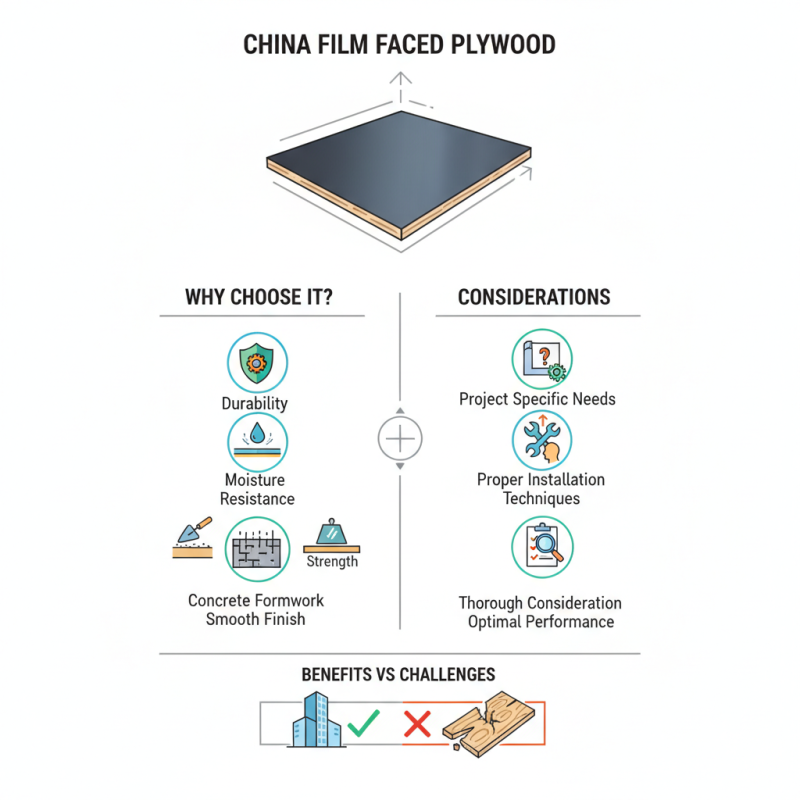
China Film Faced Plywood has gained prominence in the construction and building materials industry. This versatile material is widely preferred for its durability and resistance to moisture. Expert Wang Li, a leading authority on plywood production, emphasizes its significance by stating, "China Film Faced Plywood is an industry standard, delivering quality and efficiency."
This type of plywood features a smooth surface, making it ideal for concrete formwork. Its strength allows it to handle heavy loads, reducing the chances of warping or damage during use. Project managers often choose this material for its reliability in various weather conditions. However, some may overlook the importance of proper installation techniques.
Yet, potential buyers should reflect on their specific needs before selecting China Film Faced Plywood. Each project has unique requirements, and understanding these nuances is crucial. Opting for this material without thorough consideration may lead to unexpected challenges. Addressing these concerns will help ensure optimal performance and longevity of structures.
Definition of China Film Faced Plywood and Its Composition
Film faced plywood, often used in construction, is a versatile material. This plywood is typically made from multiple layers of wood veneer bonded together with waterproof adhesives. The surface is covered with a film layer, usually phenolic resin, which enhances durability and moisture resistance.
According to a 2021 industry report, the global film faced plywood market is projected to grow at a rate of 5.2% through 2026. This growth is driven by increasing demand in construction and infrastructure projects. The composition of film faced plywood includes high-quality wood species, ensuring strength and stability. However, it is essential to consider sustainability when sourcing materials.
Tips: When choosing film faced plywood, evaluate the source of the wood. Look for suppliers who prioritize sustainable practices. Assess the thickness and quality of the film layer for better wear resistance.
Failing to address these factors may lead to reduced performance. Many users report issues related to water damage and delamination when lower-quality products are chosen. Ensuring you select the right composition can prevent costly repairs later.
Key Characteristics and Benefits of China Film Faced Plywood
China Film Faced Plywood is a popular choice in construction due to its unique features. This type of plywood is known for its durability and moisture resistance. A report from the Timber Research and Development Association indicates that plywood made with phenolic resin can sustain high compressive loads.
The surface of film faced plywood is smooth, making it ideal for shuttering and formwork. This quality minimizes the need for additional surface treatment. Industry data suggests that film faced plywood can withstand water exposure for extended periods. This ability to resist swelling is crucial in various environmental conditions. Some users, however, note that not all products meet high standards. Some batches may have inconsistent quality.
Beyond durability, the cost-effectiveness of film faced plywood is a significant factor. A comparative analysis reported that choosing this material can reduce costs by up to 20% in some projects. Yet, potential buyers should remain aware of variations in production standards. Not every supplier guarantees the same levels of quality.
Common Applications of China Film Faced Plywood in Construction
China film faced plywood is widely utilized in construction. Its smooth, durable surface is perfect for formwork. This material stands out for its water resistance and ability to withstand heavy loads. Builders often appreciate these features in challenging environments.
In high-rise building projects, China film faced plywood is ideal. It offers excellent safety and stability during construction. Many contractors prefer this plywood for scaffolding and temporary structures. It reduces the need for frequent replacements due to wear and tear.
Some might find it heavier than other materials. This can pose challenges in handling and installation. Careful planning is crucial to mitigate such issues. Despite this, the benefits often outweigh the drawbacks. The reliability of this plywood enhances overall construction quality.
Common Applications of China Film Faced Plywood in Construction
Comparison with Other Types of Plywood in the Market
China Film Faced Plywood has become increasingly popular due to its durability and versatility. When compared to other types of plywood, it stands out in various applications. Industry reports indicate that film faced plywood offers an impressive water resistance rating, making it ideal for construction and concrete formwork. This robustness can enhance project efficiency, leading to cost savings.
In contrast, standard plywood and particle board may not withstand moisture or heavy loads as effectively. Their applications are often limited to indoor projects or dry conditions, resulting in a shorter lifespan. Additionally, recent data shows that the market demand for film faced plywood has increased by over 25% in the last five years, largely due to its effectiveness in heavy-duty applications.
However, it’s essential to consider potential downsides. While film faced plywood is strong, it can be heavier than other options. This added weight might complicate transportation and installation processes. Environmental concerns also arise regarding the materials used in production. As the industry evolves, manufacturers will need to focus on sustainability while maintaining quality.
Factors to Consider When Choosing China Film Faced Plywood
When selecting China film faced plywood, several factors come into play. This type of plywood is designed with a waterproof film on its surface, which makes it ideal for various construction projects. It resists moisture, making it suitable for outdoor use. However, potential buyers should assess the quality of the film. Low-quality films may peel or warp over time. So, examining the production methods and materials used is essential for a wise choice.
Thickness is another critical consideration. Plywood comes in various thicknesses, often ranging from 12mm to 25mm. Thicker sheets may provide extra durability, but they also add weight. Weighing the need for strength against ease of handling is crucial for any project. Additionally, stakeholders should consider environmental factors. Sustainable sourcing matters, as misuse of resources can lead to longer-term impacts. Always verify how the plywood is sourced and produced. Quality inspection can reveal unseen defects that influence performance.
Price also factors heavily into decision-making. While cheaper options may seem attractive, they can lead to increased maintenance costs or project delays. Investing in higher-quality plywood ensures longevity and reliability in construction. It's vital to balance cost with quality to achieve the best outcomes. Each of these factors contributes to the effective use of China film faced plywood in any application.
FAQS
: It is widely utilized in construction for formwork and scaffolding due to its smooth, durable surface.
It stands out for its water resistance and supreme ability to withstand heavy loads.
It offers excellent safety and stability, reducing the need for frequent replacements.
Some users find it heavier than other materials, complicating handling and installation.
Thicker sheets provide extra durability but also add weight, which can affect usability.
It's essential to evaluate the quality of the film and the production methods used.
Cheaper options may lead to higher maintenance costs; investing in quality ensures longevity.
Stakeholders should verify sustainable sourcing to minimize long-term impacts on resources.
Yes, they may peel or warp over time, affecting the plywood's performance.
It has increased by over 25% in five years due to its effectiveness in heavy-duty applications.
Conclusion
China Film Faced Plywood is a specialized type of plywood designed for construction and other demanding applications. It is made from high-quality wood veneers that are bonded together with durable adhesives and covered with a film overlay, providing resistance to moisture and wear. This construction offers numerous key characteristics and benefits, including increased strength, durability, and a smooth surface that makes it ideal for formwork in concrete construction.
Common applications of China Film Faced Plywood include use in building frameworks, flooring, and scaffolding. When compared to other plywood types, it stands out for its lower absorption capacity and better overall performance in wet conditions. However, when choosing China Film Faced Plywood, it's essential to consider factors such as thickness, surface finish, and specific project requirements to ensure optimal results.

 Quality