In today’s construction landscape, oriented strand board (OSB) plays a vital role. As experts suggest, choosing the right Osb Manufacturer is crucial for quality and performance. Mark Thompson, a renowned industry expert, once said, “The choice of an Osb Manufacturer can make or break a project.” His insight underscores the significance of selecting reputable suppliers.
The market is filled with numerous Osb Manufacturers, each claiming to provide the best products. However, not all manufacturers meet the required standards. Buyers must evaluate various factors, such as production methods, raw materials, and certifications. An informed choice ensures durability and sustainability for construction projects.
When exploring options, consider innovative practices that differentiate top manufacturers. Look for those who prioritize eco-friendly materials and advanced technology. However, navigating choices can feel overwhelming. It is essential to seek feedback and reevaluate previous experiences with different Osb Manufacturers. This reflective approach leads to better decision-making.
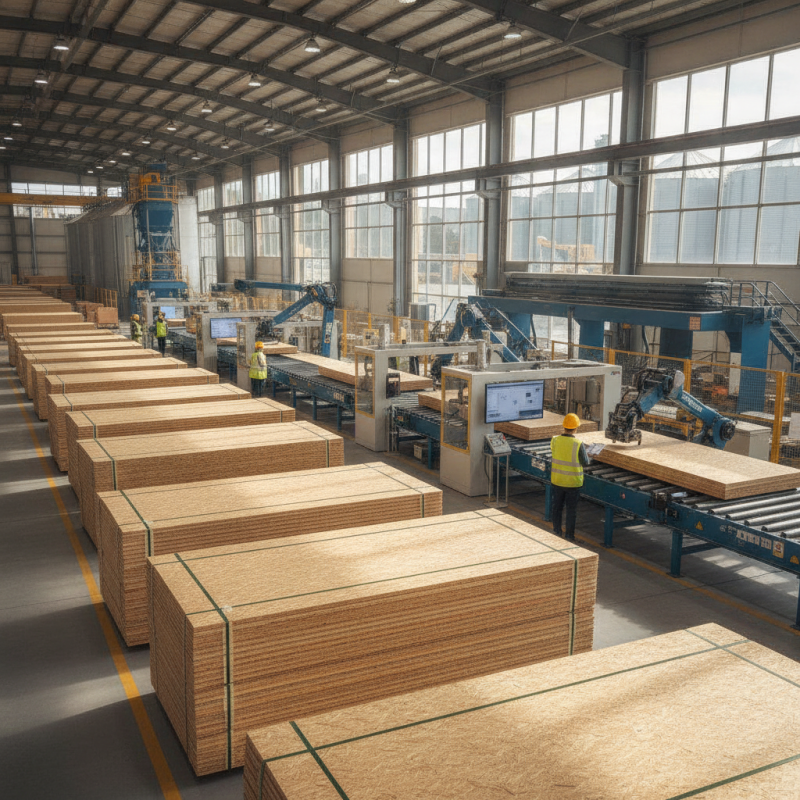
Overview of OSB (Oriented Strand Board) and Its Applications
Oriented Strand Board (OSB) has become a preferred material in construction. It is made from strands of wood, bonded together with adhesives. This process creates a strong, durable board suitable for various structural and non-structural applications. OSB is widely used in flooring, wall sheathing, and roof decking.
According to a report by Freedonia Group, global OSB demand is projected to reach over 33 billion square feet by 2025.
OSB's strength lies in its versatility and cost-effectiveness. It offers comparable performance to plywood, often at a lower price point. Its properties make it suitable for both residential and commercial projects. However, quality can vary widely among manufacturers. Evaluating factors like thickness, moisture resistance, and structural integrity is critical before making a purchase.
Tip: Always check for certification labels on OSB products. These labels indicate compliance with industry standards. Such certifications can significantly influence performance and durability.
OSB also has environmental benefits. It utilizes smaller trees, thereby supporting sustainable forestry. However, concerns about moisture susceptibility and potential off-gassing from adhesives must be considered. Careful selection and handling can mitigate these issues, ensuring better performance and safety in your projects.
Criteria for Evaluating OSB Manufacturers
When assessing OSB manufacturers, a few criteria stand out.
Quality of materials is essential.
Manufacturers should use durable, sustainable wood sources.
Products must meet specific industry standards. This ensures reliability in various applications.
Another critical aspect is production capacity.
A manufacturer must be able to meet demand without sacrificing quality.
This shows that they can handle large orders consistently. Additionally, an efficient supply chain can reduce delays.
Buyers should also consider environmental practices.
Responsible manufacturers prioritize eco-friendly processes.
This reflects a commitment to sustainability.
Customer service and support are vital.
Manufacturers must offer reliable communication and assistance.
Timely responses enhance trust.
Customer reviews can provide insights into a manufacturer's reputation.
Potential buyers should analyze feedback from previous clients.
This helps identify any recurring issues or strengths.
Such evaluations can significantly inform purchasing decisions.
Top 10 OSB Manufacturers Globally: A Summary
When considering OSB manufacturers, understanding their global impact is crucial. OSB, or oriented strand board, is vital in construction. Many manufacturers emphasize sustainability and resource efficiency. These companies often utilize fast-growing trees, reducing deforestation. This practice supports ecological balance while meeting building demands.
Quality should always be a priority. It’s essential to evaluate the strength and durability of the boards. Some manufacturers have rigorous testing processes. They ensure their products withstand various environmental conditions. However, not all manufacturers maintain the same quality standards. This inconsistency can lead to unexpected issues in projects.
Evaluating a manufacturer’s certifications is also vital. Certifications reflect their commitment to quality and sustainability practices. While many companies may claim to be eco-friendly, look for verified certifications. This can guide buyers toward more reliable options. The landscape of OSB production continues to evolve, demanding constant vigilance from buyers.
Top 10 OSB Manufacturers Globally: A Summary
| Rank |
Country |
Annual Production (Cubic Meters) |
Key Features |
Certifications |
| 1 |
USA |
1,500,000 |
High durability, moisture resistance |
FSC, PEFC |
| 2 |
Germany |
1,200,000 |
Eco-friendly production, superior strength |
CE, E1 |
| 3 |
Canada |
1,000,000 |
Lightweight, cost-effective |
FSC, CARB |
| 4 |
Austria |
800,000 |
Enhanced thermal insulation |
PEFC, ISO 14001 |
| 5 |
Finland |
750,000 |
Resistant to fungal growth |
FSC, ISO 9001 |
| 6 |
Sweden |
700,000 |
High quality raw materials |
FSC, CE |
| 7 |
China |
650,000 |
Competitive pricing, variety of products |
CARB, ISO 9001 |
| 8 |
Brazil |
600,000 |
Sustainable forestry practices |
FSC, ISO 14001 |
| 9 |
Russia |
500,000 |
Cost-effective sourcing |
PEFC, ISO 9001 |
| 10 |
India |
400,000 |
Custom sizes and thicknesses |
CARB, FSC |
Detailed Profiles of Each Recommended Manufacturer
When considering the best OSB manufacturers, it's crucial to look beyond just production capacity. The expertise of each manufacturer significantly contributes to the quality of their products. A manufacturer’s commitment to sustainability can dictate not only their production methods but also the overall impact on the environment. Buyers need to evaluate how well these companies incorporate recycled materials, reducing waste while delivering high-quality OSB panels.
Different manufacturers have unique strengths. Some focus on specialized applications, while others provide versatile solutions. This variability means buyers must examine certifications and adherence to industry standards. It’s essential to recognize that not all manufacturers offer consistent quality. Some may struggle with production delays or fluctuating quality control. Engaging in transparent conversations with manufacturers can reveal their reliability and responsiveness.
Investing time in researching each manufacturer pays off. Look for detailed profiles that outline their history, production techniques, and customer feedback. This depth of information informs purchasing decisions and builds trust. Ultimately, understanding the intricate details of manufacturer profiles enhances buyer confidence. Quality should never be compromised based on price alone; the market is full of choices.
Trends and Innovations in the OSB Manufacturing Industry
The OSB manufacturing industry is witnessing significant trends and innovations, reshaping its landscape. Increasing demand for eco-friendly building materials has prompted manufacturers to focus on sustainability. According to a recent market report, the demand for OSB is expected to grow at a CAGR of 5% from 2021 to 2026. This reflects a broader shift towards environmentally responsible practices.
Digital transformation is another critical trend. Advanced technologies like automation and AI are optimizing production processes. These innovations enhance efficiency and reduce waste. A report from industry experts indicates that automation can increase productivity by 25%. However, not all manufacturers are adopting these technologies uniformly, leading to disparities in output quality and efficiency.
Moreover, the shift towards engineered wood products provides both opportunities and challenges. While new materials offer advantages in strength and resilience, they require ongoing research and development. The industry must address quality control and standardization issues to ensure safety and reliability. Emerging players may struggle to compete against established firms due to these complexities.
Conclusion
This article provides a comprehensive overview of Oriented Strand Board (OSB), highlighting its versatility and various applications in construction and furniture manufacturing. It outlines the critical criteria for evaluating OSB manufacturers, such as product quality, sustainability practices, and technological advancements in production.
Additionally, the article identifies the top ten OSB manufacturers globally, summarizing their strengths and specialties. Detailed profiles of each recommended OSB manufacturer offer insights into their production processes and innovations, while also reflecting on the current trends shaping the OSB manufacturing industry. This resource serves as a valuable guide for global buyers looking to make informed decisions when selecting an OSB manufacturer for their projects.

 Quality